
Let's Get Certified: CPMAI - AI for PMOs and Project Managers: Past, Present, and Future
Session Overview
Artificial Intelligence is rapidly transforming the way projects and PMOs operate. This session gives project professionals a practical understanding of AI's origins, how it's used in project environments today, and where it is headed next.
Attendees will learn how AI is already helping PMs and PMOs improve reporting, streamline administrative work, strengthen governance, identify risks earlier, and support better decision-making across agile, hybrid, and waterfall environments. The presentation will also introduce the PMI Certified Professional in Managing AI (CPMAI™) methodology as a structured framework for responsible AI adoption.
The session concludes with a forward-looking discussion on AI agents, autonomous work, and how the project manager's role is evolving in the age of AI.
Learning Objectives
By the end of this session, participants will be able to:
- Understand the evolution of AI and why recent advancements are changing project management operations
- Identify practical AI use cases that PMs and PMOs can begin applying immediately
- Apply AI techniques to improve reporting, documentation, communication, and operational efficiency
- Recognize common AI project risks and understand the importance of governance and human oversight
- Understand how AI agents and autonomous workflows may reshape the future role of project managers and PMOs
- Begin developing a roadmap for AI-enabled project delivery within their organizations
Key Topics
The Past
- ● A brief history of Artificial Intelligence
- ● Machine learning fundamentals in plain language
- ● Why AI projects often fail
- ● Introduction to CPMAI™ and AI governance concepts
- ● The Seven AI Patterns and how they relate to project delivery
The Present
- ● What AI actually means for PMs and PMOs today
- ● Administrative and operational tasks AI can automate or improve
- ● Practical use cases:
- ○ Status reports
- ○ Meeting summaries
- ○ RAID logs
- ○ User stories
- ○ Stakeholder communication
- ● AI for risk detection, forecasting, and portfolio visibility
- ● PMO use cases, including vendor management and governance
- ● Live examples using current AI tools and platforms
The Future
- ● AI agents and autonomous workflows
- ● The rise of “Frontier AI”
- ● Human + AI collaboration models
- ● How the PM role is evolving from task management to orchestration and oversight
- ● The importance of prompt engineering, AI literacy, and governance
- ● What PMOs must do now to remain relevant and effective
Audience Engagement
This session includes:
- ● A live demonstration of PMI Infinity showing AI applied to real project management artifacts
- ● Interactive discussion and Q&A at the end of the presentation
- ● Real-world examples from active project environments
- ● Practical takeaways attendees can begin applying immediately within their PMO or project teams
Who Should Attend
- ● Project Managers
- ● Program Managers
- ● PMO Leaders
- ● Agile Practitioners
- ● Portfolio Managers
- ● Business Analysts
- ● Technology Leaders
- ● Anyone interested in applying AI to improve operational delivery and project performance
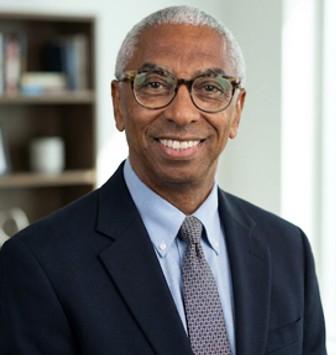
George Fountain, PMP, CPMAI+®, is an IT Project Manager, AI Readiness Strategist, and Founder of the Grant-Ready Foundation, with more than 20 years of experience leading complex technology initiatives across federal, state, nonprofit, and commercial sectors. Through Fountain Innovations Group (FIG), George currently supports the Virginia Department of Rail and Public Transportation (DRPT) on a project management consulting engagement. He has managed hundreds of IT projects and more than 50 AI implementations during his career.
He is a PMIxAI Champion representing North America and created the StAIR-Ready™ framework, an AI readiness model aligned with CPMAI methodology and NIST AI governance principles. George also holds an AI Project Design and Build certification from MIT xPRO and has invented multiple AI-driven tools that help organizations assess readiness, identify opportunities, and execute AI initiatives.
As Founder of the Grant-Ready Foundation, George helps nonprofits strengthen their capacity to identify, pursue, and compete for funding. He specializes in helping nonprofit organizations navigate AI by turning uncertainty into practical, structured action.
George also works with PMOs and project teams to adopt AI as an operational tool to reduce administrative overhead, improve reporting accuracy, strengthen governance, and identify risks earlier in the project lifecycle.
He is a member of the PMI Silver Spring, MD Chapter and is passionate about equipping project professionals and nonprofit leaders to succeed in an AI-driven environment.